Key Takeaways

  • New business compliance starts with proper formation, tax registration, and required licenses. Each step builds the foundation for operating legally and avoiding early issues.
  • Ongoing filings such as annual reports or Statements of Information must be completed on time to maintain good standing. Missing deadlines can lead to penalties or suspension.
  • Using an online filing service can simplify the process by helping you complete and submit required documents more efficiently.

Starting a new business involves more than choosing a name and opening your doors. Every business must meet specific legal and administrative requirements to stay compliant at the local, state, and federal levels. Missing even one step can lead to penalties, delays, or loss of good standing.

This small business compliance checklist walks through the core actions required from formation through ongoing operations. It is structured to help you track what must be completed, when it must be done, and how to stay current.

File Your Business Documents!

Need help filing your business documents?
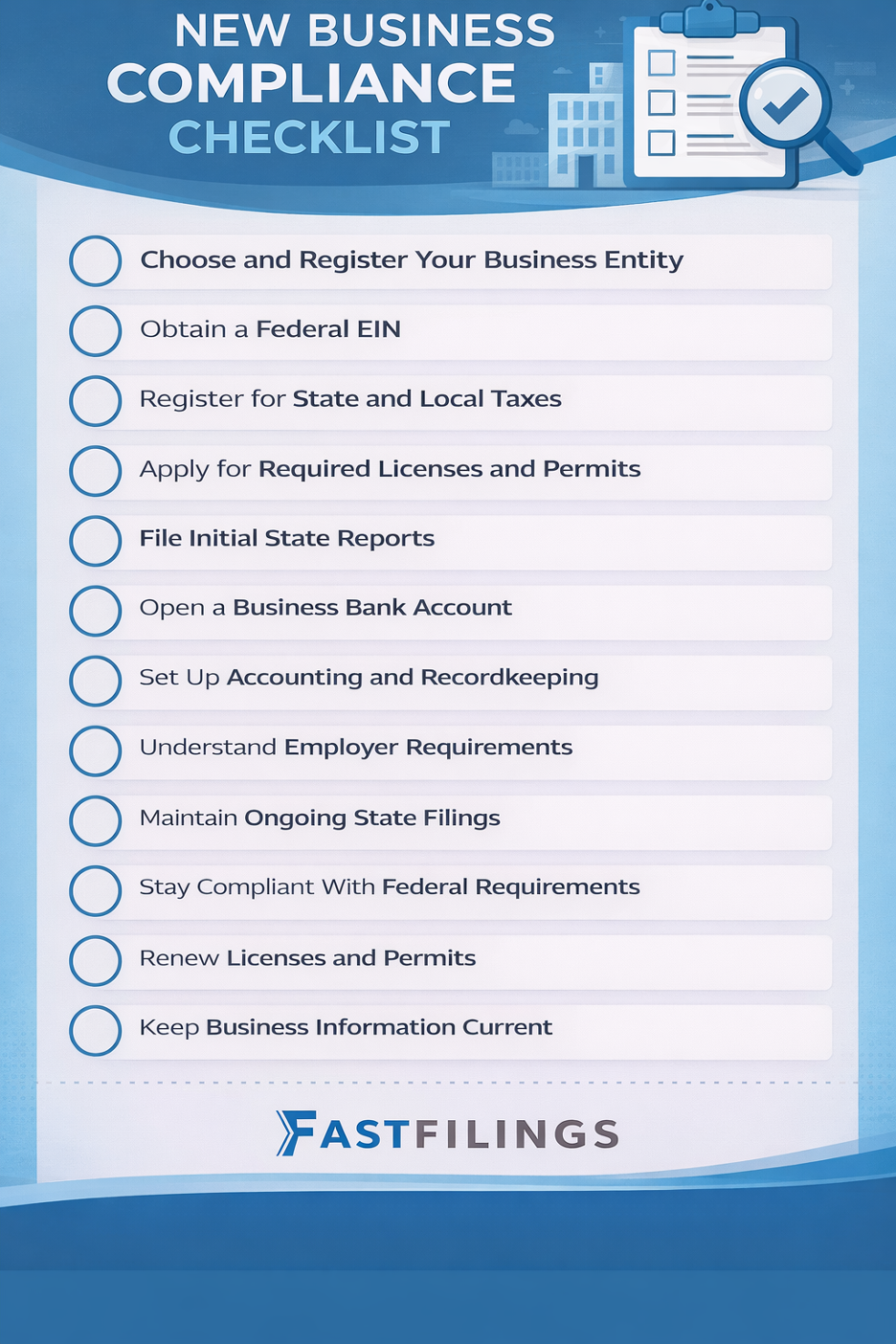
New Business Compliance Checklist

1. Choose and Register Your Business Entity

Your business structure determines how you are taxed, how liability is handled, and what filings are required.

Key steps:

  • Select a structure such as LLC, corporation, or sole proprietorship
  • Confirm name availability with your state
  • File formation documents with the Secretary of State
  • Pay the required state filing fees

Checklist:

  • Articles of Organization or Incorporation filed
  • Business name approved
  • Formation date recorded

2. Obtain a Federal EIN

An Employer Identification Number (EIN) is required for most businesses.

You need an EIN to:

  • Open a business bank account
  • Hire employees
  • File federal taxes

Checklist:

  • EIN obtained from the IRS
  • Confirmation notice saved

3. Register for State and Local Taxes

Each state has its own tax requirements based on your business activity.

Common registrations include:

  • State income tax
  • Sales and use tax
  • Employer payroll taxes

Checklist:

  • State tax accounts created
  • Sales tax permit obtained if applicable
  • Payroll tax registration completed

4. Apply for Required Licenses and Permits

Licensing requirements vary by industry and location.

Examples include:

  • General business license
  • Professional or occupational licenses
  • Health permits
  • Zoning approvals

Checklist:

  • Local business license secured
  • Industry-specific permits approved
  • Renewal dates tracked

5. File Initial State Reports

Many states require an initial report shortly after formation.

Example requirement:

Checklist:

  • Initial report submitted on time
  • Filing confirmation saved

6. Open a Business Bank Account

Separating personal and business finances is required for proper recordkeeping and liability protection.

Checklist:

  • Business bank account opened
  • Accounting system set up
  • Initial funding recorded
Open a Business Bank Account
Step 2 - Complete the online application form

7. Set Up Accounting and Recordkeeping

Accurate financial records are required for taxes and compliance.

Key elements:

  • Income tracking
  • Expense tracking
  • Receipt retention
  • Financial statements

Checklist:

  • Accounting software selected
  • Chart of accounts created
  • Recordkeeping process established

8. Understand Employer Requirements

If you plan to hire employees, additional compliance steps apply.

You must:

  • Verify employee eligibility to work
  • Report new hires to the state
  • Carry workers’ compensation insurance
  • Follow wage and labor laws

Checklist:

  • Payroll system set up
  • Employee forms completed
  • Labor law posters displayed

9. Maintain Ongoing State Filings

Most businesses must file periodic reports to remain in good standing.

Common filings:

  • Annual reports
  • Statements of Information
  • Franchise tax filings

Checklist:

  • Filing deadlines tracked
  • Reports submitted on time
  • Fees paid

10. Stay Compliant With Federal Requirementss

Federal compliance continues after formation.

Includes:

  • Filing annual tax returns
  • Making estimated tax payments
  • Maintaining required documentation

Checklist:

  • Tax deadlines scheduled
  • Federal returns filed
  • Supporting documents retained
Seller’s Permit and Resale Certificate

11. Renew Licenses and Permits

Licenses are not permanent and must be renewed regularly.

Checklist:

  • Renewal deadlines monitored
  • Applications submitted before expiration
  • Updated documents stored

12. Keep Business Information Current

Changes to your business must be reported to the state.

Examples of changes:

  • Business address
  • Ownership or management
  • Registered agent

Checklist:

  • Amendments filed when needed
  • State records updated
  • Internal records aligned
Business Compliance Checklist

Stay on Track With Your Business Compliance

Keeping up with filing deadlines and compliance requirements can take time and attention. FastFilings provides a convenient online way to manage many common business filings, helping you complete and submit required forms, such as annual report compliance, without unnecessary delays.

Get started today and keep your business in good standing with a streamlined online process.

FAQs

What do I need to open a business?

You need a registered business entity, an EIN, and any required licenses or permits. You also need to register for applicable taxes, open a business bank account, and set up basic recordkeeping.

How do I start a business in California?

The process for how to open a company in California begins with choosing a business structure and filing formation documents with the Secretary of State. After that, obtain an EIN, register for state taxes, apply for required licenses, and file the initial Statement of Information within the required timeframe.

What is the first compliance step after forming a business?

The first step on your corporation or LLC checklist after formation is typically obtaining an EIN and completing any required initial state filings. Some states also require an initial report within a short period after formation.

Do all businesses need a license?

Most businesses must meet general business license requirements at the local or state level. Additional permits may be required depending on your industry and location.

How often do compliance filings need to be submitted?

This depends on the state and entity type. Some filings are annual, while others may be required every two years—take careful note of this on your compliance checklist for companies so that you don’t miss a filing.

What happens if I miss a filing deadline?

Missing a deadline can result in late fees, penalties, or suspension of your business status. Continued noncompliance can lead to administrative dissolution.

Can I handle compliance on my own?

Yes, but many business owners choose assistance to ensure deadlines are met and filings are accurate.


File Your Business Documents Today!

Need help filing your business documents?